


Program Brief
The Promised Republic
During a discussion of his book, The Promised Republic: Developmental Society and The Making of Modern Seoul, 1961-1971, Dr. Russell Burge challenged elite-driven narratives of South Korea's "Miracle on the Han" by demonstrating how the urban poor in Seoul's shantytowns (panjachon) actively shaped developmental politics through a rich archive of memoirs, interviews, and photographs.
This program was hosted by the Korea Society as part of the Kim Koo Professional Series.
Key Takeaways
1. Bottom-up Agency Versus the Elite-Driven Narrative
Dr. Burge observed that the prevailing understanding of South Korea's economic miracle overlooks the marginalized communities that helped drive developmental politics. Focusing on the urban poor in Seoul's panjachon, or shantytowns, his research revealed that mass urban migration was primarily driven by the structural fallout of post-colonial land reform, rather than simple wartime instability. Land reform failures shattered the traditional rural safety net, pushing millions into cities as they faced heavy state taxes and plummeting grain prices driven by imports. These urban migrants became day laborers who physically built the nation's infrastructure while actively resisting state efforts to demolish their homes.
2. The Political Weaponization of Populist Promises
A central dynamic of Korean urban politics in the 1960s and 1970s was the tension between populist and disciplinary developmentalism. During election cycles, the ruling party secured votes from shantytown residents by appealing to populist sentiments and using extra-legal promises, such as Mayor Kim Hyonok's 1967 housing amnesty pledge. When the state backtracked, shantytown communities mobilized around these broken pledges, weaponizing the state's own populist rhetoric to claim a moral right to their land and extract structural concessions.
3. Joint Redevelopment and the Division of Owners and Renters
Under the authoritarian Yushin regime of the 1970s, the state shifted its tactics from targeting shantytowns for being illegal to condemning them as economically inefficient. This paved the way for the 1980s mechanism of joint redevelopment, a corporate model that successfully aligned the interests of the government, construction corporations, and local property owners into a cooperative profit-sharing system. This system successfully co-opted corporations and shanty owners, but systematically excluded propertyless renters, fracturing social cohesion and triggering intense urban resistance on the eve of the 1988 Seoul Olympics.
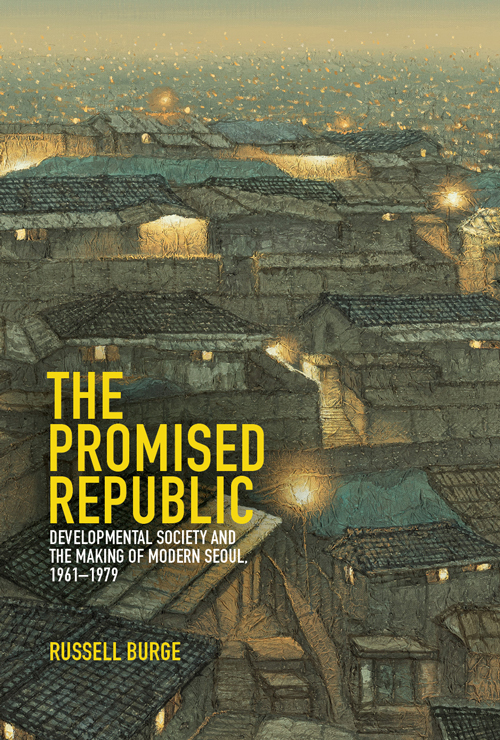
The Promised Republic: Developmental Society and The Making of Modern Seoul, 1961-1971
Thursday, May 14, 2026 | 4 PM (EDT)

About the Speaker:
 |
|
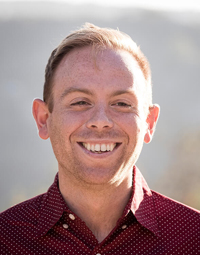
Russell Burge is Korea Foundation Assistant Professor of Korean History at Indiana University Bloomington. He holds a B.A. in Art History from UCLA, an A.M. in Regional Studies East Asia from Harvard, and a Ph.D. in History from Stanford. Prior to starting at IU Bloomington, he was a Council on East Asian Studies postdoctoral associate at Yale University. |