


Program Brief
Prospects for Relations with North Korea
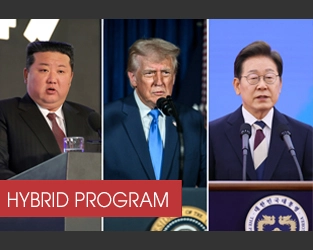
This program examined prospects for relations with North Korea, including US-Republic of Korea (ROK) alliance coordination, inter-Korean relations, the impact of North Korea's close relations with China and Russia, security concerns, and diplomatic opportunities.
North Korea's Workers' Party of Korea held its Ninth Party Congress in February. The Congress occurs approximately once every five years and results in the announcement of important policy priorities and goals for the future.
To unpack these developments, we assembled an expert panel with decades of experience working on and dealing directly with North Korea at the Korea Society in New York City. This timely discussion was moderated by Jonathan Corrado, Director of Policy Programs, The Korea Society.
This program was organized in collaboration with the National Committee on American Foreign Policy and The APEC Study Center at Columbia University.
Part I: The Diagnosis
1. North Korea's Foreign Policy Priorities ▶ [10:40]
Rachel Minyoung Lee outlined how Pyongyang's priorities shifted dramatically following the Hanoi summit breakdown, the revitalized Moscow relationship, and reorientation toward the Eurasian orbit. The Ninth Party Congress, typically signaling major policy directions, will clarify Kim Jong Un's strategic vision for the next five years.
2. U.S.-ROK Policy Coordination ▶ [14:16]
Susan Thornton evaluated alliance coordination, noting both Seoul and Washington have softened rhetoric by de-emphasizing "denuclearization" in recent policy documents. Despite improved atmospherics and South Korea's "pacemaker" approach, North Korea has remained unwilling to engage diplomatically.
3. Deterrence Risks ▶ [35:24]
Ankit Panda identified major deterrence failure risks, emphasizing North Korea's "extremely low threshold" for nuclear use. While North Korean forces gained battlefield experience in Ukraine—particularly in drone and electronic warfare—any Korean Peninsula conflict would likely escalate to nuclear within days rather than months.
4. Track 2 Diplomacy and Humanitarian Openings ▶ [39:21]
Keith Luse addressed limited prospects for Track 2 engagement. The divided families issue affecting 100,000 separated families remains urgent but faces obstacles, including U.S. passport restrictions and Pyongyang's unwillingness to cooperate.
Part II: The Treatment Plan
5. Russia-North Korea Partnership ▶ [36:10]
Lee warned the expanding Russia-North Korea relationship opens doors to Belarus and Iran partnerships. Debris from Ukraine revealed export control gaps, with North Korean missiles containing Western components. Pyongyang remains determined to acquire cutting-edge technologies including advanced semiconductors.
6. Black Swan Scenarios ▶ [1:20:48]
Thornton suggested humanitarian crises could unexpectedly catalyze diplomatic engagement, citing the Otto Warmbier case's impact during Trump's first term. The panel acknowledged that while near-term breakthroughs seem unlikely, unexpected events could create openings.
7. Engaging North Korea's Nuclear Reality ▶ [29:53]
Panda emphasized the need to accept North Korea as a nuclear-armed state and establish direct deterrence communication channels. The U.S. must decide whether to maintain a nuclear deterrence relationship "without any communication or direct engagement with our third nuclear adversary" or pursue stabilization through dialogue, as achieved with the Soviet Union and ongoing with China and Russia. This reframing moves beyond 1990s-era denuclearization goals toward practical risk reduction and crisis communication mechanisms.
8. People-to-People Engagement and Risk Reduction ▶ [28:24]
Luse advocated for maintaining people-to-people engagement opportunities between Americans and North Koreans, noting there is "no reason why we need to yield to Russia on impacting and interacting with the lives of the North Korean people." Panelists emphasized that risk reduction requires addressing concerns on both sides—while the U.S. prioritizes crisis communications, North Korea seeks assurances on regime security and military exercises. Effective engagement demands willingness to discuss adversary priorities, not just American concerns.
This brief was generated using artificial intelligence technology and has been reviewed and edited by The Korea Society Policy Department for accuracy, context, and editorial standards. All content has been verified against the program transcript and source materials to ensure factual precision.
 |
Prospects for Relations with North Korea
Tuesday, February 3, 2026 | 6:30 PM (EST)
The Korea Society
350 Madison Avenue, 24th Floor
New York, NY 10017

About the Speakers:
 |
|
Keith Luse is the Executive Director of the National Committee on North Korea. Previously, Luse was the Senior East Asia Policy Advisor for Chairman and later Ranking Member Senator Richard G. Lugar at the U.S. Senate Foreign Relations Committee from 2003 until 2013. Luse also served as Staff Director for Mr. Lugar at the Senate Agriculture Committee from 1999 through 2002, where the Senator also served as Chairman and later Ranking Member. While at the Senate Agriculture Committee, Luse made the first of eventually five trips to North Korea. In addition to assisting Senator Lugar at the Foreign Relations Committee on legislative initiatives, Luse directed or participated in several oversight projects and investigations. They included the integrity of the U.S. - funded humanitarian assistance distribution process inside North Korea; the murder of Americans in Papua, Indonesia; corruption and transparency challenges at The Asia Development Bank and The World Bank, and an evaluation of the effectiveness of U.S. foreign assistance to countries in East Asia with an emphasis on Cambodia and Indonesia. Luse has traveled extensively in East Asia including five visits to North Korea, and has participated in numerous Track 1.5 and Track 2 sessions about North Korea or with North Korean officials outside of their country. Luse's Bachelor of Arts degree in political science is from Indiana University. His graduate certificate in public management and additional graduate studies were obtained at Indiana University – Purdue University, Indianapolis. |
 |
|
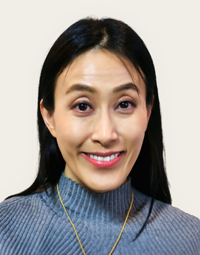
Rachel Minyoung Lee is a Senior Fellow for the Stimson Center's Korea Program and 38 North. She is also co-chair of the North Korea Economic Forum, which is part of the policy program at the George Washington University's Institute for Korean Studies (GWIKS). Lee was a North Korea collection expert and analyst with Open Source Enterprise (OSE; formerly known as Open Source Center) in the US government from 2000 to 2019. During that time, she wrote on the gamut of North Korean issues, from leadership, domestic politics and economy, and foreign policy, to social and cultural developments. As Analysis Team Lead, Lee led a team of collection officers and analysts to track and analyze North and South Korean issues with implications for Pyongyang's regime stability and regional security. Most recently, from 2022 to early 2024, Lee headed engagement and network-building efforts at the Vienna-based Open Nuclear Network (ONN). In July 2025, she was a POSCO Visiting Fellow at the East-West Center in Hawaii. Lee earned her B.A. in English literature and her M.A. in international law, both at Korea University in Seoul. |
 |
|
Ankit Panda is the Stanton Senior Fellow in the Nuclear Policy Program at the Carnegie Endowment for International Peace. His research interests include nuclear strategy, escalation, missiles and missile defense, space security, and U.S. alliances. He is the author of The New Nuclear Age: At the Precipice of Armageddon (Polity, 2025), Indo-Pacific Missile Arsenals: Avoiding Spirals and Mitigating Risks (Carnegie, 2023), and Kim Jong Un and the Bomb: Survival and Deterrence in North Korea (Hurst/Oxford, 2020). Panda is co-editor of New Approaches to Verifying and Monitoring North Korea's Nuclear Arsenal (Carnegie, 2021). Panda has consulted for the United Nations in New York and Geneva, and his analysis has been sought by U.S. Strategic Command, Space Command, and Indo-Pacific Command. Panda is among the most highly cited experts worldwide on North Korean nuclear capabilities. He has testified on matters related to South Korea and Japan before the congressionally chartered U.S.-China Economic and Security Review Commission. Panda has also testified before the U.S. Senate Subcommittee on Strategic Forces. Before joining Carnegie, Panda was an adjunct senior fellow at the Federation of American Scientists and a journalist covering international security. Panda is a frequent expert commentator in print and broadcast media around the world on nuclear policy and defense matters. His work has appeared in or been featured by the New York Times, the New Yorker, the Economist, the Washington Post, Foreign Affairs, Foreign Policy, the Bulletin of the Atomic Scientists, the Atlantic, the New Republic, the South China Morning Post, Politico, and the National Interest. Panda has also published in scholarly journals, including Survival, the Washington Quarterly, and India Review, and has contributed to the IISS Asia-Pacific Regional Security Assessment and Strategic Survey. He is editor-at-large at the Diplomat, where he hosts the Asia Geopolitics podcast, and a contributing editor at War on the Rocks, where he hosts Thinking the Unthinkable With Ankit Panda, a podcast on nuclear matters. |
 |
|
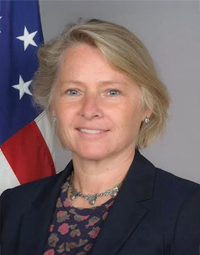
Susan A. Thornton is the Director of the Forum on Asia-Pacific Security at the NCAFP, Visiting Lecturer in Law at Yale Law School and Senior Fellow at the Paul Tsai China Center. In 2018, she retired from the State Department after a 28-year diplomatic career focused primarily on East and Central Asia. In leadership roles in Washington, Thornton worked on China and Korea policy, including stabilizing relations with Taiwan, the U.S.-China Cyber Agreement, the Paris Climate Accord and led a successful negotiation in Pyongyang for monitoring of the Agreed Framework on denuclearization. In her 18 years of overseas postings in Central Asia, Russia, the Caucasus and China, Thornton's leadership furthered U.S. interests and influence and maintained programs and mission morale in a host of difficult operating environments. Prior to joining the Foreign Service, she was among the first State Department Fascell Fellows and served from 1989–90 at the U.S. Consulate in Leningrad. She was also a researcher at the Foreign Policy Institute from 1987–91. Thornton holds degrees from the National Defense University's Eisenhower School, the Johns Hopkins School of Advanced International Studies, and Bowdoin College. She speaks Russian, Mandarin Chinese and French, is a member of numerous professional associations and is on the Board of Trustees for the Eurasia Foundation. |